







Personal branding with Bernard Kelvin CLIVE: Top 7 habits of top CEOs and personal brands
In the world of high-level branding and corporate leadership, success is never an accident. It is a result of deliberate, consistent habits that separate the icons from the average.
Over years of coaching and studying the trajectories of global giants, I have identified seven core pillars that support the weight of a massive personal brand and a thriving multi-million-dollar corporation.
If you want to play at the top, you must adopt the habits of the top. Here are the seven habits that define the elite.
They Start Before They Are Ready (The Bias for Action)
Top CEOs understand that “perfect” is the enemy of “progress.” If you wait for all the lights to turn green before you leave your house, you will never get to your destination. The elite start early, often with a “minimum viable product” or a rough draft of their vision, and they refine it in the heat of the market.
When Sir Richard Branson started Virgin Airlines, he didn’t have a fleet of planes or a background in aviation. He was stuck at an airport because his flight was cancelled. Instead of complaining, he chartered a plane, sold seats to the other stranded passengers, and started. He learned the airline business by doing it, not by studying it in a vacuum for ten years.
The Insight: Learning from mistakes made in motion is infinitely more valuable than theories gathered in isolation. Your brand grows through the feedback loop of action, failure, and correction.
Executive Reflection: What have you been overthinking? Launch it today. The market will tell you how to fix it. I have done this a couple of times, with books, yeah!
They Master the Art of Collaborative Leverage
The myth of the “self-made man” is just that—a myth. No ‘One-Man-Shows’. Top CEOs know that they are only as good as the people they surround themselves with. They don’t just hire employees; they recruit partners, visionaries, and specialists who fill the gaps in their own skill sets. They know that to 10x their success, they must 10x their human capital.
Africa’s richest man, Aliko Dangote, did not build a multi-industry empire by trying to be the smartest person in every room. He is known for headhunting the best global talent—engineers, strategists, and managers—to run his refineries and factories. He focuses on the “Big Picture” while his team of world-class experts handles the technical execution.
The Insight: Solopreneurship has a ceiling; leadership has none. If you are the smartest person on your team, your brand is in trouble.
They Invest Heavily in Systems and Tools (Smart Work)
Hard work is a prerequisite, but smart work is the differentiator. Top CEOs are obsessed with leverage. They invest in systems that can perform tasks better, faster, and more consistently than a human could. Whether it’s AI, automation, or proprietary software, they buy back their time by spending money on tools.
Jeff Bezos, at the heart of Amazon’s dominance isn’t just “hard work,” it is a relentless obsession with logistical systems. Bezos invested billions into Kiva Systems (robotics) and predictive algorithms. These systems allow Amazon to do what no human could—manage millions of items and deliver them within hours. He leveraged technology to multiply his human effort by a factor of a million.
The Insight: Don’t work for your business; build a business that works for you. If a tool can save you an hour a day, that tool is worth its weight in gold.
They Track Performance with Brutal Honesty
Top CEOs do not operate on “vibes” or “gut feelings” alone. They are data-driven. They track every KPI (Key Performance Indicator), from customer acquisition costs to brand sentiment. They measure progress so they can manage it. They distinguish between “activity” and “productivity.”
Reed Hastings, Netflix’s transition from a DVD-by-mail service to a global streaming giant wasn’t a lucky guess. It was based on data. Hastings and his team tracked exactly what people watched, where they paused, and what they searched for. They didn’t assume people wanted original content; the data told them exactly what kind of content to produce.
The Insight: Data removes the ego from decision-making. When you track your performance, you stop making excuses and start making adjustments.
They Cultivate Strategic Networks (The Silence Advantage)
As I discussed in my book, The Silence Advantage, there is a quiet power in the networks you build behind the scenes. Top CEOs understand that their “Net-Worth” is a direct reflection of their “Network.” They build alliances with institutions, influencers, and peers that provide mutual support. They don’t just “network” to get; they build ecosystems to give and grow.
Oprah Winfrey’s brand isn’t just built on her talent as a communicator; it is built on her strategic alliances. From her partnership with Hearst Communications to her early support of rising stars like Dr. Phil and Rachael Ray, she built a network that made her brand unshakeable. She positioned herself at the center of a web of influential leaders.
The Insight: Strategic networking is about positioning. Who knows you is often more important than who you know. Build your network before you need it.
They Raise Other Leaders (Succession as a Habit)
A great CEO doesn’t just create followers; they create leaders. They view people as their greatest assets. By empowering their subordinates and giving them the autonomy to lead, they ensure the organization can thrive even in their absence. This habit turns a “personality-driven” brand into a “legacy-driven” institution.
Jack Welch (General Electric). During his tenure at GE, Welch was obsessed with “the people factory.” He spent more than half his time on people-related issues—coaching, evaluating, and developing leaders. Under his watch, GE became a breeding ground for CEOs who went on to lead other Fortune 500 companies. He knew that his legacy wasn’t in the products, but in the people he raised.
The Insight: If your business stops when you take a vacation, you haven’t built a brand—you’ve built a job. Raise leaders to find freedom.
They Master the Art of Narrative (The Chief Storyteller)
The final habit of the top 1% of CEOs is that they are all Master Storytellers. They understand that people don’t buy “what” you do; they buy “why” you do it. They use their personal brand to tell a story that aligns with the values of their audience. They are the Chief Brand Ambassadors, constantly articulating the vision, the mission, and the future.
Steve Jobs didn’t just sell computers; he sold the idea of “Thinking Differently.” He was a master of the narrative. Every product launch was a story—a hero (the user) overcoming a villain (complexity and bad design). He used his personal brand to give Apple a soul. He understood that a CEO’s most powerful tool is their voice.
The Insight: Facts tell, but stories sell. If you cannot articulate your vision in a way that moves people, you will never lead them. Your story is your most valuable asset.
Success at the highest level is not about working harder than everyone else; it’s about working differently. It’s about the courage to start early, the humility to work with others, the wisdom to use systems, the discipline to track data, the strategy to build networks, the generosity to raise leaders, and the skill to tell a compelling story.
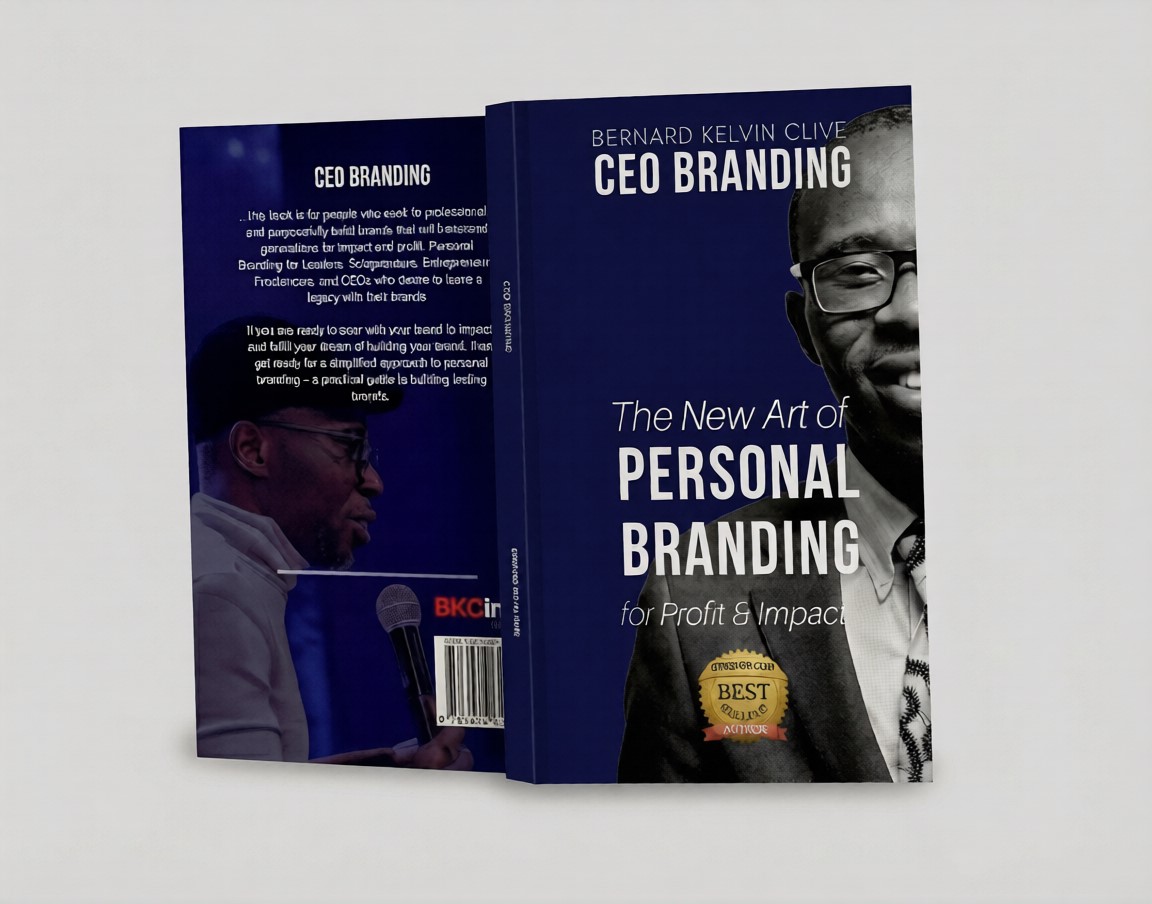
These are the habits of the greats. Which one will you start practicing today? Remember to get my books: ‘CEO Branding’ and ‘The Silence Advantage’.
Remember, I am your Branding and Publishing Consultant.