









Iran vows to fight on and block all Gulf oil
Iran warns no oil will leave the Gulf during war, deepening global fears over supply disruptions and volatile energy markets.
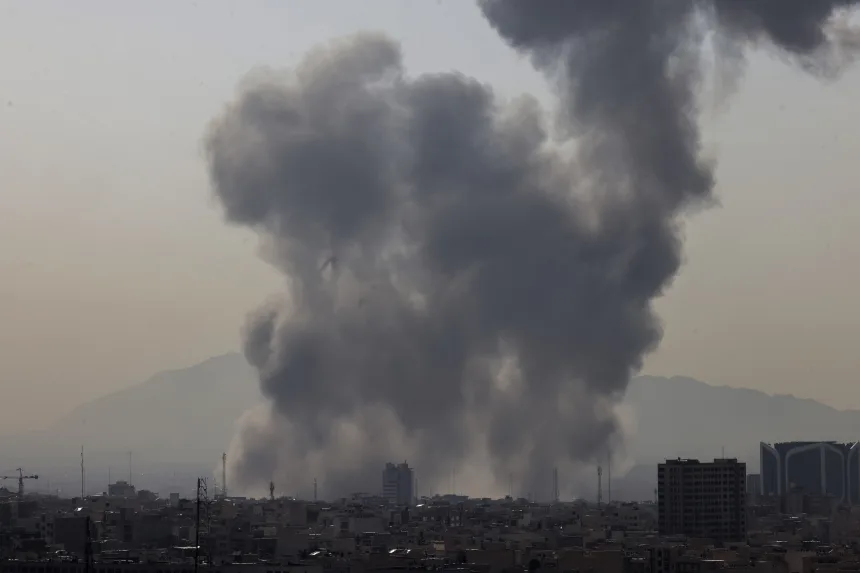
Iran vowed on Tuesday that not one litre of oil would be exported from the Gulf while its war with the United States and Israel continues, in a stark rebuke to President Donald Trump’s boast that the conflict was all but over.
Trump’s argument that the war would be “ended soon” helped reverse the Monday’s spike in oil prices, which have surged since Iranian attacks on shipping closed the Strait of Hormuz in response to the US-Israeli strikes that killed its supreme leader.
The price increase also followed strikes on oil depots in Iran and after attacks on oil infrastructure in Saudi Arabia and Bahrain.
After Trump’s comments, European gas prices opened 15 percent lower, and Asian stock markets recovered from Monday’s slump and their European counterparts opened higher. But concern remains high.
Qatar, which has suspended LNG exports and sent European energy prices sky-high, said Iranian attacks on its civilian infrastructure were continuing, and the Israeli military announced a new wave of attacks on Tehran.
“There would be catastrophic consequences for the world’s oil markets the longer the disruption goes on, and the more drastic the consequences for the global economy,” Saudi oil giant Aramco’s president and CEO Amin H. Nasser told journalists. “It’s absolutely critical that shipping resumes in the Strait of Hormuz.”
ALSO READ: Absa sounds warning on energy prices, rand, as profits climb to record
‘As long as it takes’
Egypt increased the cost of fuels by up to 30 percent and Pakistan said it would provide naval escorts to commercial shipping. France has dispatched warships to the region.
Iran’s Revolutionary Guards Corps (IRGC) mocked Trump’s bid to lessen the economic impact of the war, warning: “The Iranian armed forces… will not allow the export of a single litre of oil from the region to the hostile side and its partners until further notice.”
“It is we who will determine the end of the war,” the IRGC, seen as close to Iran’s new supreme leader Ayatollah Mojtaba Khamenei said, in a statement carried by Iranian media.
And, in a message aimed directly at Washington, Iran’s Foreign Minister Abbas Araghchi told PBS News: “We are well prepared to continue attacking them with our missiles as long as needed and as long as it takes.”
Tehran’s top diplomat, who has remained in his post since Mojtaba Khamenei replaced his slain father as supreme leader, complained that the US had attacked Iran before while diplomatic talks were ongoing.
“I don’t think talking with Americans anymore would be on our agenda,” he said.
ALSO READ: Spiralling oil prices could spell trouble for SA agriculture … and consumers
‘Death, fire and fury’
Iran’s apparent confidence reflected that expressed by Trump, who gave a news conference in a Florida ballroom to declare of the war: “It’s going to be ended soon, and if it starts up again they’ll be hit even harder.”
“We’ve already won in many ways, but we haven’t won enough,” Trump said.
But, in a later post on his social media platform, Trump warned that if Tehran continues to interfere with oil exports, the US military would bomb the country in such a way to “make it virtually impossible for Iran to ever be built back, as a nation, again.”
“Death, fire, and fury will reign upon them – But I hope, and pray, that it does not happen!” he wrote.
Israel’s Prime Minister Benjamin Netanyahu also predicted that the conflict would continue, expressing hope that the Iranian people would seize the opportunity to overthrow the Iranian government.
“Our aspiration is to bring the Iranian people to cast off the yoke of tyranny. Ultimately, it depends on them. But there is no doubt that, with the actions taken so far, we are breaking their bones, and we are not done yet,” he said.
ALSO READ: Misa raises concerns over possible record petrol price hike in SA
Rare volatility
On Monday, world oil prices swept past the symbolic level of $100 a barrel and were briefly up 30 percent on the day, before falling back dramatically after Trump’s intervention. But experts warned that the economic outlook remains extremely volatile.
“Rare are days in the markets when you get this much volatility,” said Ipek Ozkardeskaya, an analyst for Swissquote Bank, warning that investors are overreacting to every bit of news even when officials’ statements contradict each other.
“Part of yesterday’s optimism came after Trump said the war would end ‘soon’ and that the US was ahead of schedule. Concretely, however, the conflict in the Middle East continues at full speed, political developments are not pointing to a near-term resolution, and there is little clarity about the US plans,” she said.
Iran has targeted vessels travelling through the Strait of Hormuz, through which nearly 20 percent of the world’s crude oil usually transits from the Gulf to world markets, especially in Asia and Europe.
French President Emmanuel Macron said Monday his country and its allies were working on a “purely defensive” mission to reopen the strait, aiming to escort ships “after the end of the hottest phase of the conflict”.
Turkey, meanwhile, said NATO was deploying a Patriot air defence system in the centre of the country after two ballistic missiles were intercepted in its airspace since the start of the war.
ALSO READ: Brazil warns SA to boost defence to avoid invasions